

What are the Experimental Principle of Separating and Identifying Drug Components?
Thin-layer chromatography involves uniformly coating an adsorbent or carrier onto a glass plate or other plate to form a thin layer. Based on the principle that the same component should exhibit the same chromatographic behavior under the same chromatographic conditions, a comparison method is used under specific chromatographic conditions. If the analyte and the reference standard show spots of the same color at the same position, they can be identified as the same component. This method is used for qualitative identification, impurity testing, and content determination of drugs.
Usually, the reference standard and sample solution are spotted separately on the same TLC plate. A suitable developing solvent is selected, utilizing the different adsorption capacities of the adsorbent for different components in the solution and the different desorption capacities of the developing solvent for different components to achieve separation. The separated TLC plate is examined under sunlight or ultraviolet light, and the position and Rf value of the reference standard spot are used for analysis.


Silica gel is a commonly used adsorbent in TLC analysis, analyzed by the fluorescent spots or dark spots formed after sample development.
Compound sulfamethoxazole is a compound preparation containing sulfamethoxazole (SMZ) and trimethoprim (TMP). After developing the sample with a suitable solvent on a silica gel thin-layer plate, examine at 254 nm for any fluorescent dark spots to achieve identification.
What are the Experimental Procedures for Separating and Identifying Drug Components?
1. Preparation of SMZ and TMP reference solutions: Weigh 0.2g of sulfamethoxazole and 40mg of trimethoprim, and dissolve each in 10ml of methanol.
2. Preparation of compound sulfamethoxazole sample solution: Weigh an appropriate amount of fine sample powder, add 10ml of methanol, sonicate for 15min, filter, and collect the filtrate.
3. Preparation of the developing solvent for compound sulfamethoxazole identification: Prepare the solvent according to the ratio of chloroform-methanol-dimethylformamide (20:20:1).
4. Thin-layer plate preparation: Weigh 5-7g of CMC-Na, place it in 100ml of water, heat to dissolve, mix well, and let stand for one week until clear before use. Weigh 7g of silica gel and add 20ml of CMC-Na supernatant. After thorough grinding, spread the paste-like adsorbent evenly on a dry, clean glass plate (10cm×20cm). Due to the fluidity of the paste, gently shake the glass plate from side to side to ensure even distribution and obtain a uniform thin-layer plate. Let it air dry, then activate it at 105–110℃ for 1 hour and store it in a desiccator for later use.
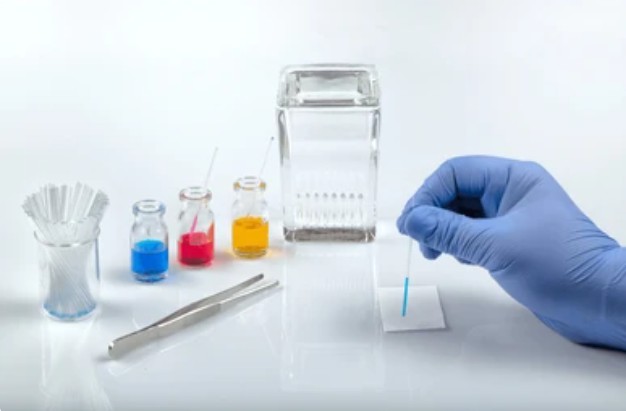
5. Spotting and development: Lightly draw a starting line 1.5cm from the bottom edge of the thin-layer plate with a pencil. Using a micro-spotter, spot 5μl each of SMZ, TMP (or berberine hydrochloride, baicalin) reference solutions and the corresponding test solutions, ensuring the spot diameter does not exceed 3mm. After the solvent evaporates, immerse the end of the thin-layer plate with the sample spotted in a chloroform-methanol-dimethylformamide (20:20:1) developing solvent and develop it upwards. When the developing solvent has migrated about 10 cm, remove the thin-layer plate and immediately draw the solvent front with a pencil. After the developing solvent has evaporated completely in a fume hood, examine the plate under UV light at 365 nm and 254 nm, respectively, and mark the position and shape of each spot.
Please kindly note that our products are for research use only.


