CAS
72695-23-9 Purity
95%
72695-23-9 Purity
95%


If you have any other questions or need other size, please get a quote.
Specification
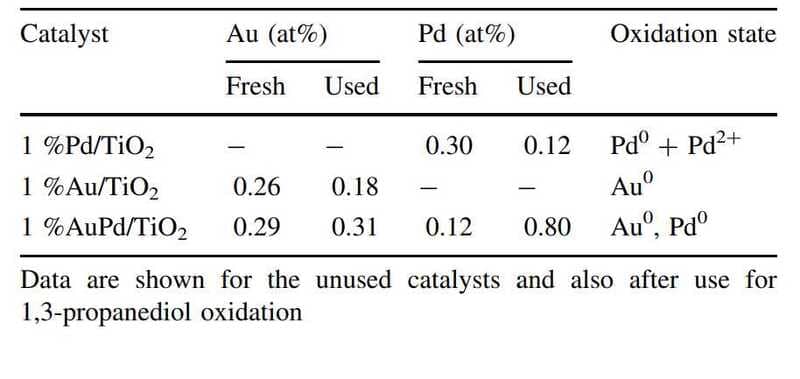 Kotionova, Tatyana, et al. Catalysis letters 142 (2012): 1114-1120.
Oxidative esterification of a series of homologous diols with methanol using molecular oxygen has been investigated using gold, palladium, and gold-palladium catalysts supported on titanium dioxide. The gold-palladium catalyst showed the highest activity, with 1,3-propanediol being the most reactive, while the additional methyl group reduced the reactivity. However, high selectivity towards methyl 3-hydroxypropanoate and 2-methyl-3-hydroxyisobutyric acid could be achieved by single oxidation. Methyl 3-Hydroxypropanoate is the key product in the oxidative esterification of 1,3-propanediol, and its formation is closely related to the activity of the catalysts such as Au-Pd/TiO2. The stability and hydrolysis behavior of this ester affect the final product distribution of the reaction, while side reactions reveal the complexity of the reaction system. These findings are consistent with studies on noble metal-catalyzed oxidative esterification and the formation pathway of 3-hydroxypropanoic acid in biotransformation.
A 50 mL Radleys low-pressure reactor with a maximum operating pressure of 4 bar was used for the oxidative esterification. In the experiment, the reactor was loaded with 1,3-propanediol, 2-methyl-1,3-propanediol or 2,2-dimethyl-1,3-propanediol (1.5 mmol), sodium hydroxide (1.5 mmol, 0.06 g), methanol (7.9 g) and catalyst (substrate/metal molar ratio of 500/1). After the reactor was sealed, it was purged with oxygen three times and pressurized to 3 bar with oxygen; during the entire reaction process, the oxygen inlet remained open so that it could be replenished in time when oxygen was consumed. The reaction mixture was heated to 80°C with stirring at 1000 rpm and cooled to 20°C for sampling periodically. Subsequently, the reactor was filled with oxygen again and reheated to 80°C. Methyl 3-Hydroxypropanoate was detected as a product of the oxidative esterification reaction of 1,3-propanediol.
 Xiaolong, Fang, et al. 42.5 (2022): 1407.
Ruthenium acetylacetonate and aminophosphine ligands were selected as the catalytic system and applied to the catalytic hydrogenation of dimethyl malonate to prepare methyl 3-hydroxypropionate. Focusing on the catalytic efficiency, the important factors that have a significant impact on the conversion rate of dimethyl malonate and the selectivity of methyl 3-hydroxypropionate, such as ligand structure, dosage, reaction temperature, reaction time, solvent, etc., were discussed. The results show that the catalytic system of ruthenium acetylacetonate and o-diphenylphosphinoaniline ligands can achieve significant catalytic effects. Under the optimal reaction conditions, the catalytic system can also be efficiently applied to the catalytic hydrogenation of some other esters.
A homogeneous catalyst system composed of Ru(acac)3 and o-diphenylphosphinoaniline was used to synthesize methyl 3-hydroxypropionate. The effects of reaction conditions such as ligand dosage, reaction temperature and time, and solvent on the catalytic performance were systematically investigated. The study found that the molar ratio of Ru(acac)3 and o-diphenylphosphinoaniline was 1:2, which was more suitable. In addition, compared with the use of methanol as a solvent, the use of methanol-THF mixed solvent can effectively improve the catalytic hydrogenation performance of the catalytic system. Under the optimized reaction conditions, the DMM conversion rate reached 86%, and the yields of the target products 3-HPM and 1,3-PDO were 75% and 8%, respectively.
 Rodríguez-Linares, Diana, et al. Journal of Molecular Structure: THEOCHEM 902.1-3 (2009): 41-48.
The effects of solvent on the pyrolysis of methyl 3-hydroxypropanoate were investigated using the SCIPCM model and a multipolar metasurface procedure. Important information about the kinetics and thermodynamic behavior of the reaction was provided by a combination of explicit and implicit models. Quantum mechanical optimization and statistical thermodynamics of MMH yielded the thermodynamic magnitude of the reaction in solution. Optimal configurations for solute-solvent association by explicit addition of m-xylene molecules were provided. MMH can be used as a fast and reliable method for predicting reactions in certain media and can provide additional information about solute-solvent intermolecular binding.
The MMH method is a straightforward approach that allows for correction for environmental effects in calculations of separated molecules. The theoretical basis of MMH has been previously proposed. Nevertheless, a summary of the general procedure is provided for better understanding of the computational setup and key results.
Mhp = Enol + Form where Mhp is the methyl 3-hydroxypropanoate molecule, the enol is 1-metoxi-enol, and the form is a formaldehyde molecule.
 Shiroudi, Abolfazl, Theo Kurtén, and Jacek Czub. Scientific Reports 15.1 (2025): 1038.
The degradation of 3-methoxy-1-propanol by OH radicals was investigated using M062X/6-311++G (d, p) levels and CCSD(T) single-point correction pair (3M1P). The rate coefficients for 3M1P degradation were calculated as the sum of the rate coefficients corresponding to the removal of H atoms from primary (-CH), secondary (-CH-), tertiary (-CH<), and alcohol (-OH) groups. The primary attack by hydroxyl radicals occurs at the hydrogen atom bonded to the carbon atom adjacent to the oxygen atom in the ether group, leading to the formation of alkyl radicals. Radical reactions can also form methyl 3-hydroxypropanoate. This strong agreement confirms the reliability of the calculation method, providing insights into the atmospheric reactivity and degradation pathway of 3M1P. The tropospheric lifetime of 3M1P is approximately 15 h, indicating rapid atmospheric degradation and potentially contributing to photochemical smog. OH radical reactions produce alkyl radicals, which subsequently add molecular oxygen to form peroxy radicals. IM2α is an α-hydroxyperoxy radical that undergoes unimolecular elimination by HO radicals to form 3-methoxypropanal. Other IM2 radicals primarily react with NO under polluted conditions, leading to ozone formation. For all the remaining three cases, this NO... The reaction is also barrier-free and exothermic, resulting in alkoxy radicals (IM3i). The subsequent reactions of IM3i differ from each other. IM3 radicals primarily react with O2 to form methyl 3-hydroxypropanoate, while IM3β and IM3γ radicals may undergo both O2 addition and C-C bond cleavage reaction pathways simultaneously.
The molecular formula of Methyl 3-Hydroxypropanoate is C4H8O3.
The synonyms of Methyl 3-Hydroxypropanoate are Propanoic acid, 3-hydroxy-, methyl ester and Methyl hydracrylate.
The molecular weight of Methyl 3-Hydroxypropanoate is 104.10 g/mol.
Methyl 3-Hydroxypropanoate was created on March 27, 2005.
The IUPAC name of Methyl 3-Hydroxypropanoate is methyl 3-hydroxypropanoate.
The InChI of Methyl 3-Hydroxypropanoate is InChI=1S/C4H8O3/c1-7-4(6)2-3-5/h5H,2-3H2,1H3.
The InChIKey of Methyl 3-Hydroxypropanoate is RVGLEPQPVDUSOJ-UHFFFAOYSA-N.
The Canonical SMILES of Methyl 3-Hydroxypropanoate is COC(=O)CCO.
The CAS number of Methyl 3-Hydroxypropanoate is 6149-41-3.
The hydrogen bond acceptor count of Methyl 3-Hydroxypropanoate is 3.
Please kindly note that our products are for research use only.
 Download


