CAS
10553-85-2 Purity
---
10553-85-2 Purity
---


If you have any other questions or need other size, please get a quote.
Specification
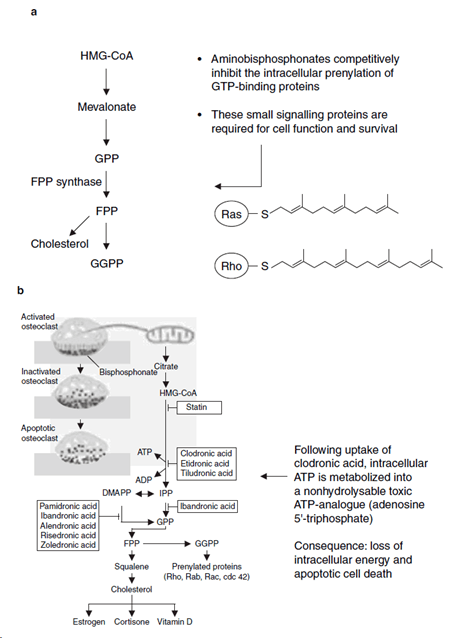 Frediani B, et al. Clinical drug investigation, 2009, 29, 359-379.
Clodronic acid is a halogenated, nonnitrogen-containing bisphosphonate that has shown antiresorptive efficacy in a variety of diseases associated with excessive bone resorption. These include Paget's disease, hypercalcemia of malignancy, osteolytic bone metastases, and primary hyperparathyroidism. In addition, clodronate has been shown to be effective in preventing and treating osteoporosis, especially in postmenopausal women. A review of studies evaluated the various formulations of clodronate available in Europe, their pharmacological properties, and their efficacy and tolerability in the treatment and prevention of osteoporosis. It should be noted that this article cannot serve as medication guidance.
Pharmacological properties of clodronic acid
· Many molecules based on the P-C-P bond structure have been synthesized, and their structural variability is reflected in pharmacological and toxicological differences. Clodronic acid appears to inhibit bone resorption through induction of osteoclast apoptosis.
· In vitro, animal and clinical studies have indicated anti-inflammatory effects of non-nitrogen- containing bisphosphonates. It has been shown antiinflammatory effects of clodronic acid in vivo and in vitro.
· The clinical results pointing to an anti-inflammatory effect of clodronic acid, with beneficial effects of the drug on pain and inflammation having been noted in a variety of studies in patients with arthritic and other bone disorders and diseases.
 Tanakol, R., Yarman, S., Bayraktaroglu, T., Boztepe, H., & Alagöl, F. Clinical Drug Investigation, 2007, 27, 419-433.
Clodronic acid, a first-generation bisphosphonate that induces apoptosis in osteoclasts by inhibiting mitochondrial ADP translocation and ATP production, has been evaluated for the treatment of postmenopausal bone loss. In a 3-year prospective, randomized, controlled evaluation, 30 osteoporotic postmenopausal women received oral clodronic acid 800 mg daily plus elemental calcium 500 mg and vitamin D 400 IU, while 49 osteoporotic controls received calcium and vitamin D only. BMD measured by dual-energy X-ray absorptiometry showed that clodronic acid significantly increased femoral neck BMD by 3.2 ± 2.9%, trochanter BMD by 2.2 ± 2.9% and lumbar spine BMD by 3.1 ± 3% after 36 months, whereas controls lost -6 ± 2.7%, -7.3 ± 2.5% and -5.4 ± 2% (p < 0.01-0.05). Urinary hydroxyproline, a bone-resorption marker, fell by 38.3% from baseline in the clodronic acid group (p < 0.05). Clodronic acid was well tolerated with no clinically meaningful difference in adverse events, supporting daily oral clodronic acid 800 mg as an effective option for postmenopausal osteoporosis, whereas calcium and vitamin D alone did not prevent further bone loss.
 Frediani, B. Clinical Drug Investigation, 2011, 31, 43-50.
Clodronic acid has been administered intramuscularly for postmenopausal osteoporosis with the goal of improving adherence through reduced dosing frequency. Two intramuscular regimens of clodronic acid have been compared in postmenopausal osteoporotic women: 100 mg once weekly versus 200 mg every 2 weeks (given as two 100 mg administrations on two consecutive days), each combined with lidocaine and continued for 2 years.
Both clodronic acid regimens produced comparable increases in lumbar spine BMD at 1 and 2 years (group A: +2.8% and +3.5%; group B: +2.7% and +3.9%; p < 0.05 to p < 0.01). Femoral neck BMD rose significantly with clodronic acid in group A at both timepoints (+2.3% and +2.5%, p < 0.05) and in group B after 2 years (+2.8%, p < 0.05), with a significant gain in total femur BMD in group A at 2 years. Two vertebral fractures occurred in group A (6.6%) and three in group B (10.0%). Clodronic acid was well tolerated, with only mild injection-site pain in three patients.
Intramuscular clodronic acid 200 mg every 2 weeks provides a similar densitometric effect to the weekly 100 mg schedule, offering an alternative option that may benefit long-term adherence in postmenopausal osteoporosis.
Enhancing Research with Clodronic Acid
In my science research, I used Clodronic Acid from Alfa Chemistry as a regulator for calcium. It significantly improved the efficiency of my experiments and provided accurate results in the study of cell signaling pathways related to osteoporosis. I highly recommend this product for researchers in the field.
The molecular formula of clodronic acid is CH4Cl2O6P2.
The molecular weight of clodronic acid is 244.89 g/mol.
The synonyms of clodronic acid include Clodronate, 10596-23-3, (Dichloromethylene)diphosphonic acid, and Clodronsaeure.
Clodronic acid has a role as a bone density conservation agent and an antineoplastic agent. It inhibits bone resorption and soft tissue calcification and is used in the treatment of severe hypercalcaemia associated with malignancy, as well as in the management of osteolytic lesions and bone pain associated with skeletal metastases.
Although the exact mechanism is not fully elucidated, clodronic acid is metabolized intracellularly to a toxic beta-gamma-methylene analog of adenosine triphosphate (ATP), AppCCl2p. The ATP analog competitively inhibits ADP/ATP translocase, thereby interfering with mitochondrial membrane potential and cellular energy metabolism. This may cause osteoclast apoptosis and, eventually, inhibiting osteoclast-mediated bone resorption.
No, clodronic acid is not FDA approved. However, it is approved in Canada.
Clodronic acid is a first-generation bisphosphonate.
The IUPAC name of clodronic acid is [dichloro(phosphono)methyl]phosphonic acid.
The Canonical SMILES of clodronic acid is C(P(=O)(O)O)(P(=O)(O)O)(Cl)Cl.
The CAS number of clodronic acid is 10596-23-3.
Please kindly note that our products are for research use only.
 Download


