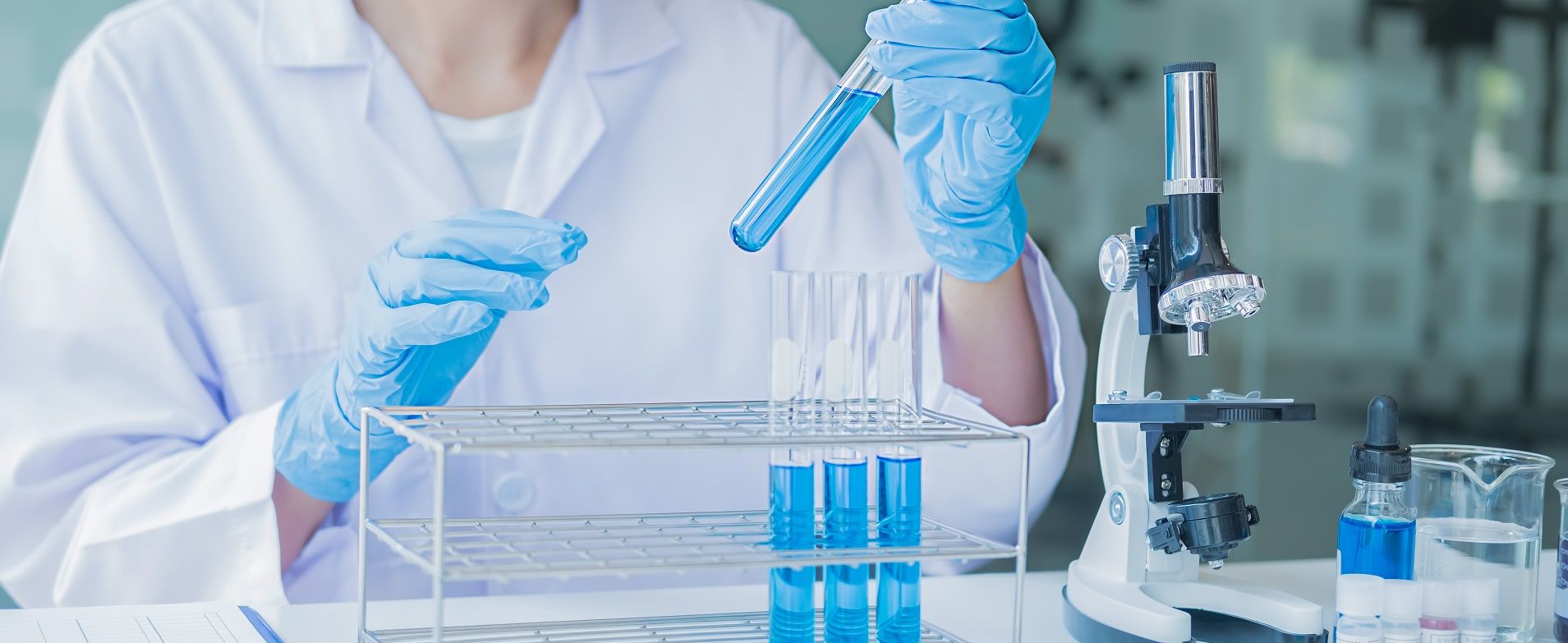
Paint & coatings are a substance that is coated on the surface of the object to be protected or decorated, and can form a continuous film with the coated material to protect, decorate and cover up product defects or other special functions. They are a large and growing market, covering various sectors such as construction, automotive, furniture, marine, industrial equipment, etc. The huge market further promotes the development of new and advanced paint and coatings. Therefore, deformulation has always been a hot topic in the paint and coatings analysis areas because understanding the compositions of existing product is the first step to formulation development. In addition, deformulation analysis is also widely used in case of researching and comparing competing products, identifying special active ingredients and/or trace contaminants, analyzing and determining the composition of an unknown formulation, and many others. However, deformulation of paint & coatings is especially difficult since they may contain 15 ingredients or more and many of these ingredients are low in content. Alfa Chemistry is a laboratory specializing in deformulation analysis, and our team of engineers and technicians have a strong chemical analysis ability that can successfully deformulate the most complex paint & coating products.
Why Do You Need Deformulation Service?
In the paint and coatings industry, formulation is the foundation of product performance. Deformulation provides the analytical intelligence needed to understand, optimize, and innovate coating formulations. Our service supports a wide range of strategic objectives:
- Competitive product analysis: Understand the formulation strategy of market-leading products by identifying their complete resin, pigment, solvent, and additive systems. Deformulation reveals the technical choices that differentiate winning formulations.
- Formulation optimization: Identify opportunities for cost reduction, performance improvement, or raw material substitution through comprehensive composition analysis and functional ingredient profiling.
- Quality control and troubleshooting: Diagnose formulation-related defects such as poor adhesion, color inconsistency, gloss variation, or premature failure through detailed compositional analysis.
- Regulatory compliance: Ensure compliance with VOC regulations, REACH, TSCA, and other global chemical management standards by accurately quantifying solvent content, heavy metals, and restricted substances.
- Raw material verification: Verify incoming raw materials against specifications, identify adulteration or substitution, and ensure consistency across supply chains.
- Patent protection and risk assessment: Support patent infringement investigations, freedom-to-operate analyses, and intellectual property protection through detailed formulation characterization.
Meet Our Services
Alfa Chemistry's deformulation lab has the ability to test a wide range of paint & coatings products. And we perform customized extractions and specialized instrumental techniques to identify and quantify the ingredients or composition of products such as resin, solvent, pigment, and additives. In this regard, we offer multiple levels of deformulation service.
Paint & coatings products we deformulate include, but are not limited to:
- According to the form of the product, we can test liquid coating, powder coating, high solid coating.
- According to the dispersion medium, we can test solvent-based coating, water-based coating, emulsion-based coating.
- According to their applications, we can test architectural coatings, automotive coatings, aircraft coatings, home appliance coatings, decorative coating, wood coatings, bridge coatings, plastic coatings, paper coatings, marine coatings, and so on.
- According to their functions, we can test anti-corrosion coatings, anti-rust coatings, insulating coatings, high temperature resistant coatings, aging resistant coatings, acid and alkali resistant coatings, chemical medium resistant coatings, fireproof coatings, waterproof coatings, anti-fouling coatings, conductive coatings, thermal insulation coatings and so on.
- According to whether there is color, we can test varnish, color paint.
All in all, no matter what type of paint & coatings you have, Alfa Chemistry can provide you with a deformulation service. It is worth noting that we can perform deformulation service on both solid paint & coatings specimens and liquid paint & coatings specimens.
Ingredients contained in paint & coatings we test include, but are not limited to:
- Resins: Rosin, ester gum, pentaresin, coumarone-indene resins, pure phenolic resins, modified phenolic resins, maleic resins, alkyd resins, urea resins, melamine resins, vinyl resins, petroleum resins, epoxy resins, polyester resins, polystyrene resins, acrylic resins, silicone resins, rubber-based resins, chlorinated resins, urethanes, etc.
- Additives: Antisettling agents, antiskinning agents, bodying and puffing agents, antifloating agents, loss of dry inhibitors, leveling agents, foaming, grinding of pigments, preservatives, mildewcides, antisagging agents, glossing agents, flatting agents, penetration, wetting agents, freeze-thaw stabilizers, coalescing agents, etc.
- Solvents: Petroleum solvents, aromatic solvents alcohols, esters, ketones, etc.
- Pigments: Titanium dioxide, zinc oxide, extender pigments, calcium carbonate, magnesiumsilicate, aluminum silicate, carbon black, lampblack, red pigments, violet pigments, blue pigments, yellow pigments, orange pigments, green pigments, brown pigments, metallic pigments, special-purpose pigments, etc.
- Oil: Linseed oil, soybean oil, tung oil, oiticica oil, fish oil, dehydrated castor oil, safflower oil, tali oils, etc.
- Driers: Cobalt, lead, manganese, calcium, zirconium, zinc, etc.
- Other: Plasticizers, water-based polymers and emulsions, etc.
Our paint & coatings deformulation capabilities include, but are not limited to:
- Full identification & quantification of all chemical components
- Semi-quantitative identification of major and minor ingredients
- Identification of major or substrate ingredients
- Quantification of specific components
The Four-Element Analysis Framework
Paint and coating formulations are complex chemical systems that can be systematically understood through the four-element analysis framework: Resins, Pigments, Solvents, and Additives. This framework provides a structured methodology for deformulation that ensures complete characterization of the coating system while revealing the functional relationships between each component category.
1. Resin Analysis
Resins are the film-forming backbone of any coating formulation. They determine the fundamental mechanical properties, chemical resistance, and durability of the coating. At Alfa Chemistry, our resin deformulation approach includes:
- Polymer identification: FTIR, Py-GC-MS, and NMR spectroscopy for identifying the polymer backbone, copolymer composition, and functional group modifications.
- Molecular weight distribution: GPC/SEC analysis to determine the molecular weight and polydispersity index, which directly impact film formation and mechanical properties.
- Crosslinking characterization: Identification of crosslinking agents and curing chemistry, including melamine-formaldehyde, isocyanate, and epoxy-amine systems.
- Resin content quantification: TGA and extraction-based methods for determining the total resin solids content and the ratio of film-forming resin to non-volatile components.
- Thermal characterization: DSC and TGA for measuring glass transition temperature (Tg), thermal stability, and curing behavior of the resin system.
2. Pigment Analysis
Pigments provide color, opacity, and functional properties such as corrosion resistance and UV protection. Our pigment deformulation methodology delivers comprehensive characterization:
- Organic and inorganic pigment identification: XRD, SEM-EDS, and Raman spectroscopy for identifying pigment types, crystal structures, and particle morphology.
- Pigment volume concentration (PVC): Accurate determination of PVC and its relationship to the critical pigment volume concentration (CPVC), which governs coating porosity and film properties.
- Extender pigment analysis: Identification and quantification of extenders such as calcium carbonate, talc, silica, and barytes, which influence gloss, viscosity, and sag resistance.
- Functional pigment characterization: Analysis of corrosion-inhibiting pigments (zinc phosphate, zinc chromate), UV-blocking pigments (zinc oxide, titanium dioxide), and conductive pigments.
- Particle size distribution: Laser diffraction and dynamic light scattering for determining pigment particle size distribution, which directly affects gloss, hiding power, and settling behavior.
3. Solvent Analysis
Solvents control the viscosity, application properties, and drying behavior of liquid coatings. Solvent deformulation is also critical for VOC compliance and environmental regulation:
- Solvent system identification: GC-MS headspace analysis for identifying all organic solvents in the formulation, including active solvents, latent solvents, and diluents.
- VOC content determination: Accurate quantification of volatile organic compounds by EPA Method 24, supporting regulatory compliance with EU Solvent Emissions Directive, US EPA, and CARB standards.
- Solvent blend ratio analysis: GC-FID for determining the precise ratios of co-solvents in the solvent blend, which controls the evaporation rate and film formation quality.
- Water content analysis: Karl Fischer titration for precise water content determination in water-based coating systems.
- HAPs and restricted solvent screening: Identification of hazardous air pollutants (HAPs) and regulated solvents such as toluene, xylene, and MEK, ensuring compliance with occupational exposure limits.
- Evaporation profile correlation: Linking solvent composition to drying time, film formation, and defect formation through analytical characterization.
4. Additive Analysis
Additives are the performance enhancers of coating formulations. Although present at low concentrations, they critically influence application properties, film quality, and long-term durability:
- Surface active agents: Identification of wetting agents, dispersants, defoamers, and leveling agents using LC-MS and FTIR, including quantification of critical micelle concentrations.
- Rheology modifiers: Analysis of thickeners, anti-settling agents, and sag control agents, including their impact on the coating's rheological profile.
- Preservatives and biocides: Identification and quantification of in-can preservatives and dry-film biocides, supporting compliance with biocide regulations.
- Catalysts and driers: ICP-MS analysis for metal driers (cobalt, manganese, zirconium, calcium, zinc) and identification of catalyst systems for curing reactions.
- Stabilizer systems: Analysis of UV stabilizers, antioxidants, and light stabilizers (HALS) that protect the coating from environmental degradation.
- Specialty functional additives: Identification of matting agents, slip additives, anti-blocking agents, and corrosion inhibitors that provide targeted performance enhancements.
Techniques and Instruments
Alfa Chemistry uses various techniques and instruments for paints deformulation, including but not limited to:
How We Proceed?

Frequently Asked Questions
Q: What is the four-element analysis framework for paint and coatings deformulation?
A: The four-element analysis framework is a systematic deformulation methodology that organizes coating characterization into four interconnected categories: resin (film-forming backbone), pigment (color and functional properties), solvent (application and drying control), and additive (performance enhancement). This framework ensures comprehensive analysis while revealing the functional relationships between each component category.
Q: What is the minimum sample size required for paint and coatings deformulation?
A: Sample requirements depend on the product type and analysis scope. For liquid coatings, 50-100 mL is typically sufficient for a full deformulation. For powder coatings, 50-100 g is recommended. Dried film specimens require at least 10-20 g. Our scientists will advise on the specific requirements for your project.
Q: Can deformulation determine the VOC content of a coating formulation?
A: Yes, VOC content determination is a standard component of our paint and coatings deformulation service. Using GC-MS headspace analysis, Karl Fischer titration, and gravimetric methods, we can accurately quantify VOC content in accordance with EPA Method 24, EU Solvent Emissions Directive, and other international standards.
Q: How does deformulation help with coating failure analysis?
A: Deformulation plays a critical role in failure analysis by identifying the root cause of coating defects. By comparing the formulation of a failed coating to a known good formulation, we can identify deviations in resin chemistry, pigment loading, solvent balance, or additive concentration that may have contributed to the failure. This information enables targeted formulation correction.
Q: Can Alfa Chemistry analyze both solvent-based and water-based coatings?
A: Yes, Alfa Chemistry has extensive experience with both solvent-based and water-based coating systems. Our analytical platform is capable of handling the full spectrum of coating chemistries, including high-solids, powder, and radiation-curable formulations. We adapt our extraction and analytical methods to the specific coating type to ensure accurate results.
Q: Are the deformulation results confidential?
A: Absolutely. All project information, analytical data, and results are treated as strictly confidential. Alfa Chemistry is happy to sign a non-disclosure agreement (NDA) before project initiation. Our confidentiality protocols ensure that your proprietary formulation information is fully protected.
Please kindly note that our products and services are for research use only.